The Quiet Weight of Worry and Stress
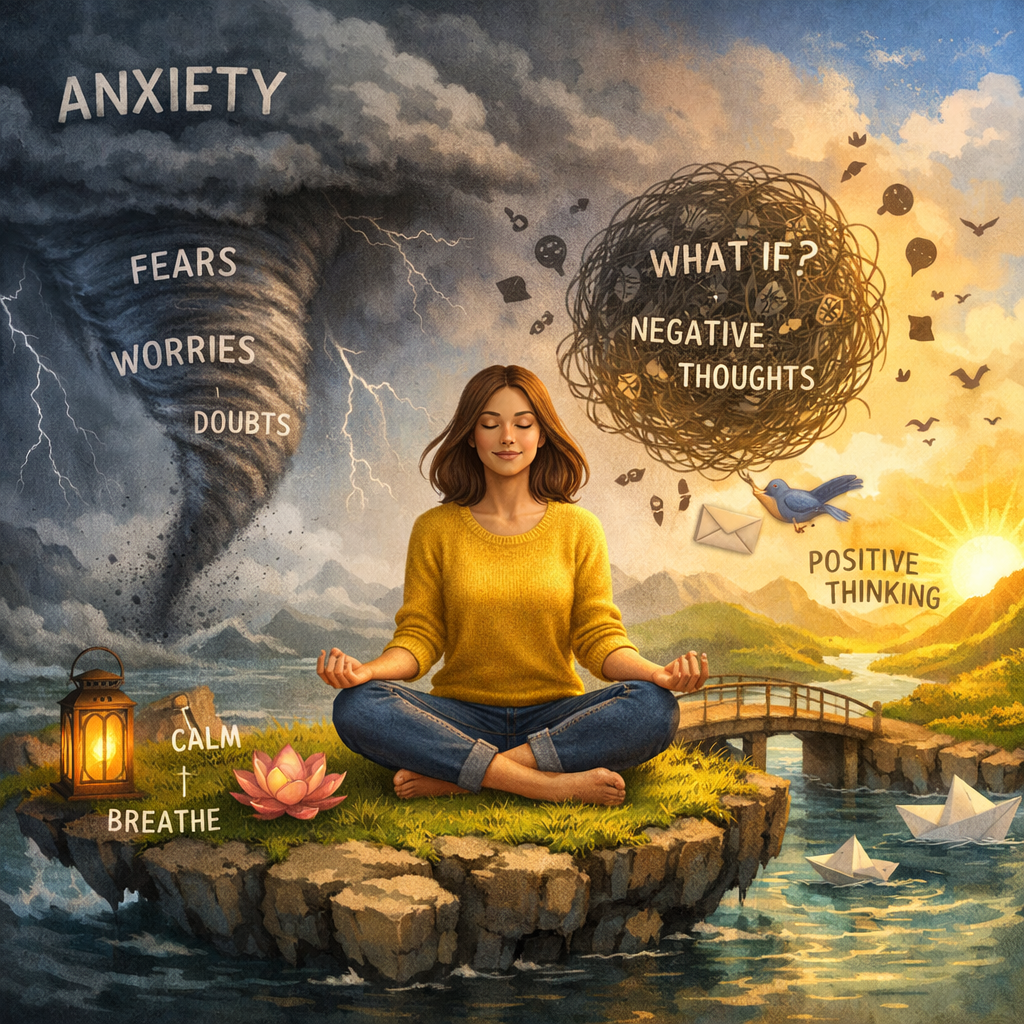
Anxiety and worry are often described as quiet companions that follow us through the day. They don’t always arrive loudly. Sometimes they appear as a tight feeling in the chest during a morning commute, a restless thought before sending an email, or the inability to fully relax even when everything seems fine. For many people, anxiety is not a dramatic event but a constant background noise that slowly shapes how life is experienced.
In small doses, worry can be helpful. It reminds us to prepare, to stay alert, and to care about what matters. But when anxiety becomes persistent, it begins to influence daily life in subtle yet powerful ways. Ordinary decisions feel heavier. Simple conversations are replayed in the mind. Rest becomes difficult, and the body carries tension long after the day has ended.
One of the first places anxiety shows up is in our thinking. Thoughts become future-focused and filled with “what ifs.”
What if something goes wrong?
What if I fail?
What if people judge me?
These thoughts rarely stay contained. They loop, repeat, and grow stronger with attention. Instead of helping us prepare, they trap us in imagined scenarios that may never happen. Over time, this mental pattern drains energy and reduces our ability to focus on the present moment.
Anxiety also affects the body in ways we often overlook. Muscles tighten without us noticing. Breathing becomes shallow. Sleep grows lighter and less restorative. Even digestion and immune function can be influenced by prolonged stress. The body, trying to protect us, remains on alert as if danger is always near. Living in this constant state of readiness is exhausting, both physically and emotionally.
Relationships can quietly suffer as well. When worry dominates the mind, it becomes harder to listen fully, respond patiently, or feel emotionally available. Some people withdraw to avoid judgment or conflict. Others seek constant reassurance, fearing disapproval or loss. In both cases, anxiety builds invisible walls between people who genuinely care about each other.
Work and productivity are another area deeply touched by anxiety. Contrary to the myth that worry makes us perform better, chronic anxiety often reduces clarity, creativity, and confidence. Tasks feel overwhelming. Procrastination increases; but not from laziness. But from fear of imperfection. Even achievements may feel temporary, quickly replaced by the next worry. Instead of satisfaction, there is only brief relief.
Perhaps the most painful effect of ongoing anxiety is how it narrows life. People begin avoiding experiences that might trigger discomfort: social gatherings, new opportunities, honest conversations, or meaningful risks. Life becomes smaller, safer, and quieter—but also less joyful. The world doesn’t actually become dangerous; it simply feels that way from inside an anxious mind.
Yet anxiety is not a personal failure. It is a human response shaped by biology, experience, and environment. Understanding this truth is often the first step toward healing. When we stop blaming ourselves, we create space for compassion which is where change begins.
This is where positive psychology offers something deeply hopeful. Rather than focusing only on what is wrong, positive psychology explores what helps people thrive: resilience, gratitude, emotional awareness, supportive relationships, and purposeful living. These are not abstract ideas; they are practical skills that can be learned and practiced daily.
Simple practices can gently interrupt the cycle of worry. Slow, intentional breathing signals safety to the nervous system. Writing down anxious thoughts helps separate imagination from reality. Noticing small moments of gratitude shifts attention from threat to possibility. Even brief pauses of mindfulness—feeling the ground under your feet, the rhythm of your breath, the warmth of sunlight—can remind the mind that the present moment is often safer than the stories we tell about the future.
Consistency matters more than intensity. Healing anxiety is rarely about one dramatic breakthrough. It is usually a quiet process of small, repeated actions that slowly retrain the brain and body to feel safe again. Like strengthening a muscle, emotional resilience grows through gentle, regular practice.
The Anxiety & Worry Management Collection of positive psychology was created with this understanding at its heart. Instead of overwhelming people with complex theories, it offers compassionate, practical tools that fit into real daily life. The focus is not on eliminating anxiety completely—because some level of concern is natural—but on transforming our relationship with it.
Through guided reflections, calming exercises, and evidence-based techniques, the collection helps individuals move from constant tension toward steadier calm. It encourages awareness without judgment, action without pressure, and hope without unrealistic promises. Most importantly, it reminds people that they are not alone in what they feel.
What makes this approach meaningful is its humanity. It recognizes that behind every anxious thought is a person trying to stay safe, do well, and be accepted. Instead of fighting the mind, the collection teaches how to listen to it with kindness, and then gently guide it toward balance.
Imagine beginning the day with a few minutes of grounding instead of rushing straight into worry. Imagine responding to stress with calm breathing rather than self-criticism. Imagine ending the day with reflection and gratitude instead of replaying fears. These small shifts may seem simple, yet over time they can transform the emotional tone of an entire life.
Change does not happen overnight. But every moment of awareness is a step. Every compassionate thought is progress. Every choice to pause, breathe, and care for your inner world is meaningful. Anxiety may visit, but it does not have to control the story.
Daily life is shaped not only by what happens to us, but by how we meet those moments internally. When we learn to meet worry with understanding rather than fear, something remarkable begins to unfold: space. Space to think clearly. Space to feel peacefully. Space to live more fully.
And in that space, hope grows.
The journey toward calm is not about becoming a different person. It is about returning to the steadiness that has always existed beneath the noise. With the right support, gentle tools, and compassionate guidance—like those found in the Anxiety & Worry Management Collection of positive psychology or in another psychological tools and psychotherapy—this return is not only possible, but deeply achievable.
Because a life guided by calm, clarity, and quiet confidence is not a distant dream. It is a direction we can begin walking toward today.
If you need guidance about how to manage stress or worry, please do not hesitate to contact me.
